Photo from The St. Regis Chicago
Chicago is a city shaped by reinvention. From the architectural creations and bold vision of Frank Lloyd Wright to infamous gangster Al Capone and to the enduring stories of the Great Chicago Fire of 1871, the rich history of Chicago and its neighborhoods reflect generations of innovation, resilience, and architectural ambition, while attracting residents and tourists to the Windy City. Part of Chicago’s story is that of the famous Lakeshore East neighborhood. Now the city’s most successful large-scale residential development site, the 28-acre, $4 billion architectural and botanical marvel has its own humble beginnings. Today, the neighborhood is known for skyline architecture, green space and lakefront proximity. Yet its origins tell a very different story.
From Lake Michigan’s shoreline and Chicago’s longstanding rail yard to golf course and globally recognized residential district, the history of Lakeshore East mirrors Chicago’s continual evolution.
From Lake Michigan Shoreline to Working Harbor
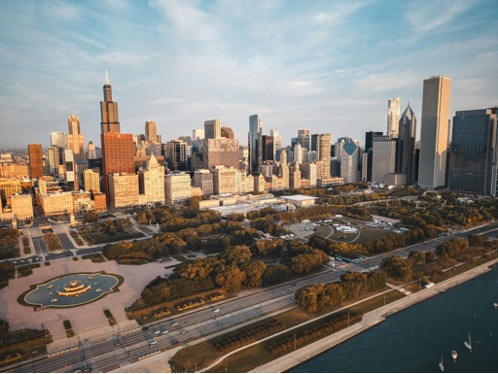
Our modern lakefront views have a very different form than what they looked like back in the 19th century. The New East Side neighborhood, and within it what would now be known as Lakeshore East, was an integral part of Lake Michigan, supporting the city’s growing economy as a bustling port from which the Illinois Central Railroad shipped goods from the Great Lakes to New Orleans. The port’s surrounding railyard helped to control city flooding and became a major freight yard. In 1871, the harbor was used as a depository for landfill from the Great Chicago Fire.
As Chicago grew into a national commercial center, nearby rail and freight operations became essential to the movement of goods. The Illinois Central Railroad played a major role in connecting Chicago to markets across the Midwest and beyond.
The Railroad Era and the Rise of the New East Side
For decades, rail yards dominated this portion of downtown. Over time, changing transportation patterns like expanded highway systems, along with trucking and modern logistics networks, reduced the importance of those central rail yards. As railroad operations eventually dwindled, the development of a national highway network and the combustion engine over the early 1900s increased and flourished.
Post World War II, airspace rights were sold by the railroad and the rails were abandoned. This made way for major commercial and residential development in the second half of the 20th century.
An Unexpected Chapter: The Golf Course Years
Replacing the west 83 acres of the railroad yards came the Illinois Center, a myriad of office towers, hotels, and residential buildings. The east 28-acre wing, what is Lakeshore East today, became a par-3 nine-hole golf course in 1994.
This unusual chapter would soon give way to one of the city’s most ambitious urban redevelopment efforts.
The Vision for Lakeshore East
Irons and putters did not touch the land for long. In 1998, Magellan Development Group hired internationally renowned architects at Skidmore, Owings & Merrill to create their AIA award-winning Master Plan integrating all 28 acres of the land with its complex three-level street system.
A preview of the future, Lakeshore East was designed for Chicagoans to live, work, shop, eat, and explore their interests without having to get into a car.
The Master Plan required 40 percent to be open space, incorporating a 6-acre park at its center and connections to the city’s lakefront amenities and Pedway system.
Lakeshore East Park: The Neighborhood’s Centerpiece
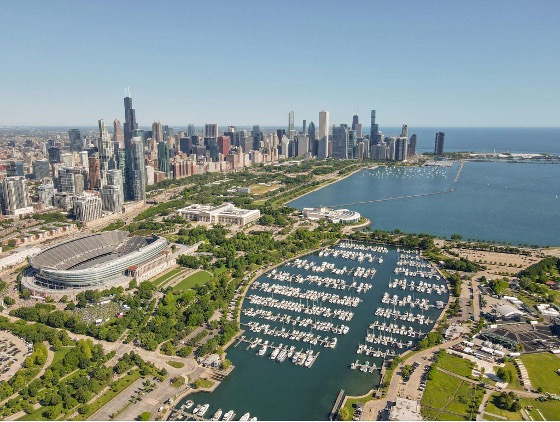
The heart of the Lakeshore East community is its award-winning park. Opened in 2005, Lakeshore East Park is a botanical marvel with 500 trees of over 20 varieties and more than 100 varieties of perennials and annuals.
Paying homage to Lakeshore East’s history as a thriving port and its connection with the waterfront, the park’s nautical theme is exemplified in the shape of walkways, plantings, and many fountains.
The urban oasis also includes a lively dog park, children’s play area, ornate gardens, and plenty of seating. It is also Chicago’s first park to offer free wireless connection.
Architecture That Reshaped the Skyline While a Neighborhood Evolves
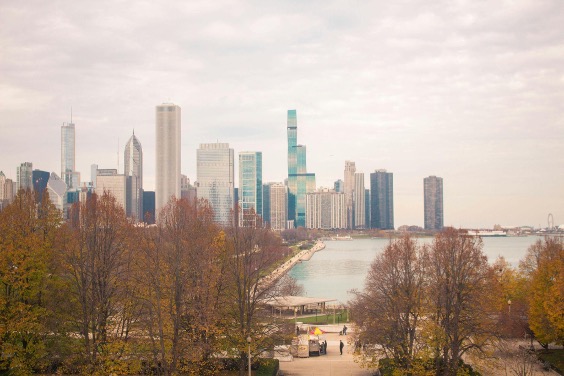
Architectural wonders in Lakeshore East have made their mark in Chicago and international history. In 2009, Lakeshore East made international waves when Jeanne Gang’s Aqua opened. Featuring a hotel, condos, and luxury apartments, the tower’s wavelike silhouette became an iconic part of the Chicago skyline.
Its aquatic name, like many of the Lakeshore East structures, pays homage to the lakefront location and the site’s history as a port. However, Jeanne Gang and her team brought the New East Side, and more specifically Lakeshore East, to new heights with the record-breaking The St. Regis Chicago in 2020. The 101-story tower not only became the third tallest building in Chicago, but the tallest structure designed by a female architect in the world.
From starting as a port and railyard to becoming the largest downtown development of any major U.S. city, Lakeshore East is intertwined with history. The innovative mixed-use neighborhood honors its past while pointing us to the future of urban living.
In Lakeshore East, Chicago history is always in the making. To experience the neighborhood’s legacy and future firsthand, schedule a private introduction to The St. Regis Residences Chicago in Lakeshore East.